Showing posts with label Temporary pickles. Show all posts

Monday, 17 October 2016

Dabbakaya pokkadam (chakotara/lemon sweet and sour pickle)

Dabbakaya is a citrus fruit/vegetable as big as a grapaefruit. It has thicker skin and flavor different from lemon. Chakotara, gal gal nimbu etc. are almost like dabbakaya. This sweet and sour temporary pickle is very tasty and is a good side dish for rice, roti, idli and dosa. I tried using the large size lemons available in USA and the taste is almost like dabbakaya. I made this dish using chakotara, small oranges also.


Ingredients:

  •      2 cups dabbakaya/chakotara/lemon pieces
  •      3 to 4 green chiles (less spicy and according to taste)
  •      1/4 Tsp. turmeric powder
  •      1 Tsp. methi seeds
  •      1 Tsp. mustard seeds
  •      4 to 5 Tbsp. jaggery
  •      3 Tsp. rice flour or corn flour
  •      Pinch of hing (asafetida)
  •      Salt to taste

Directions:

  1.      Wash and cut dabbakaya/chakotara/lemon into 1 cm cubes.
  2.      Let the seeds be there.
  3.      Wash and cut green chiles into big pieces.
  4.      Roast methi seeds without oil, for 1 or 2 minutes.
  5.      Roast mustard seeds also without oil for a minute, till they splutter.
  6.      Grind methi mustard to a fine powder.
  7.      Take a deep pan and place chakotara and chile pieces.
  8.      Add turmeric powder, salt, methi mustard powder and jaggery.
  9.      Add a few spoons of water to the mixture and heat.
  10.      Mix rice flour in a little cold water and add it to the boiling mixture.
  11.      Keep stirring while the mixture is cooking.
  12.      Cook for 3 to 5 minutes.
  13.      Pieces of chakotara need not be very soft.
  14.      Take the pan off the heat and transfer to a dry jar.
  15.      Place it in refrigerator.
  16.      Can be kept in refrigerator for a few months.
This is a great side dish for idli, dosa, daddhojanam (yogurt rice) or parathas.


Monday, 18 April 2016

Small oranges pickle (Chinese oranges or kumquat pickle)

Chinese oranges or ornamental oranges are originally from China. From there they were introduced to Europe and North America. Small orange plant symbolizes good luck in China and other Asian countries. The plant and fruits are given as gifts during Chinese Lunar New Year.

In India, small round orange color variety are available. These fruits have a sweet edible skin and tart flesh.  The fruits are eaten raw in salads. In USA they are called Kumquats and are oval in shape. In India, the small orange plant is grown as an ornamental plant in pots for bonsai etc. and also in gardens. You can grow the plant in a pot in your balcony and harvest the fruits for pickle or marmalade! I could not find what these oranges are called in India. In North India, the fruits are available.

These oranges are mostly used in making marmalade. But, we can make very nice spicy pickle with them. Kumquats are a very good source of vitamins, calcium, magnesium, sodium etc. They are  known to help to reduce aging, improve lung health etc. and improve wound healing. Kumquats are mostly used in salads in USA.

I had a chance to get some oranges from a friend. I tried this pickle, which I believe, is very tasty. I made the same pickle using kumquat in USA. If you prefer, you may add some jaggery and make a sweet and sour pickle. In the sweet variety, you have to keep the bottle in sun for 3 to 4 days, so that the jaggery melts.


Ingredients:

  •      Large bowl of small oranges (about 50 oranges)
  •      1/4 cup chili powder
  •      1/4 cup salt
  •      1/2 cup oil
  •      1/4 Tsp. turmeric
  •      1/2 Tsp. mustard seeds
  •      Pinch of hing (asafetida)
  •      1/2 cup sugar (optional)

Directions:

  1.      Wash and clean oranges
  2.      Dry them over a clean cloth.
  3.      Make a plus sign cut, so that the fruit is not fully cut.
  4.      Add turmeric, salt and chili powder.
  5.      Heat oil in a pan.
  6.      Add mustard seeds and when seeds are spluttering, add hing.
  7.      Pour the hot oil over the oranges and cover.
  8.      After sometime transfer the pickle to a bottle and save.
  9.      If preferred, you may add half cup sugar.
  10.      Keep the bottle in hot sun for 3 or 4 days, so that the sugar melts.
  11.      It is a temporary pickle and stays for a few months, if refrigerated.


Friday, 16 October 2015

Cranberry pickle (South Indian style)


This happens to be my 100th post in my blog! I never thought that I can manage a food blog at all!!

In my family and among my close friends, Sita's cooking was always a big joke. I was never very interested in cooking. Maybe that is the reason to start this blog, where I try to spend very little time in the kitchen and prepare some healthy and nutritious food!

My husband Gokhale Kolluru was the first person who urged me to document the recipes so that the next generation could be benefited. I dedicate my blog to his memory. My daughter-in-law Doreen Gillespie is good at gardening and experimenting in cooking. It is her insatiable interest which makes me give her more and more recipes. All the members of my family are encouraging me in this ongoing effort.

When I started my blog, I did not even know how to post or insert pictures or link posts etc. For me, it is a continuous  learning process. A lot of youngsters were teaching me how to start a blog, how to go about these procedures. I am indebted to all of them. Of course, I thank all friends from everywhere who are following my recipes.

My sister Mrs Kamala Subbarao was an expert cook. Cooking was a passion for her. She was always experimenting with ingredients and combinations. My niece, Neelaveni Sankar has contributed this post which is her mother's recipe.

Pickle immediately after making:                                                       Pickle after 2 or 3 days:


Ingredients:

  •      2 Cups cranberry
  •      4 Tbsp. chile powder
  •      4 Tbsp. mustard seeds
  •      5 Tbsp. salt
  •      4 Tbsp. oil
  •      1/2 Tsp. turmeric powder
  •      Pinch of hing (Asafetida)

Directions:

  1.      Wash and dry cranberries.
  2.      Grind mustard seeds to make mustard powder. (If you get ready  made mustard powder, you may use that)
  3.      Heat oil in a deep pan.
  4.      Add cranberries.
  5.      Cook on low heat till cranberries pop.
  6.      Turn off heat.
  7.      Add turmeric powder, hing, salt, chile powder and mustard powder.
  8.      Mix well and let it cool.
  9.      Transfer to a dry bottle and refrigerate.


Monday, 15 September 2014

Kurala avakaya (Mixed vegetable avakaya)

This is a temporary pickle. It is a very popular pickle in our families. The recipe came down from my grandmother through my mother etc. Unlike the other mixed vegetable pickles where vinegar is used, here the ingredients are chili powder, mustard powder and salt which are used in our regular pickles. The vegetables mentioned below are used. Approximately the vegetable pieces are equal to the amount of mango pieces used. If refrigerated, the pickle stays for more than 2 or 3 months.
If the mango is not sour enough, you may add some citric acid. I have made the pickle in USA, adding rhubarb which is very sour and you do not need to add citric acid .
 
You can add green apple pieces also.
The vegetable pieces, specially bitter gourd taste very nice after they are soaked for a few days.


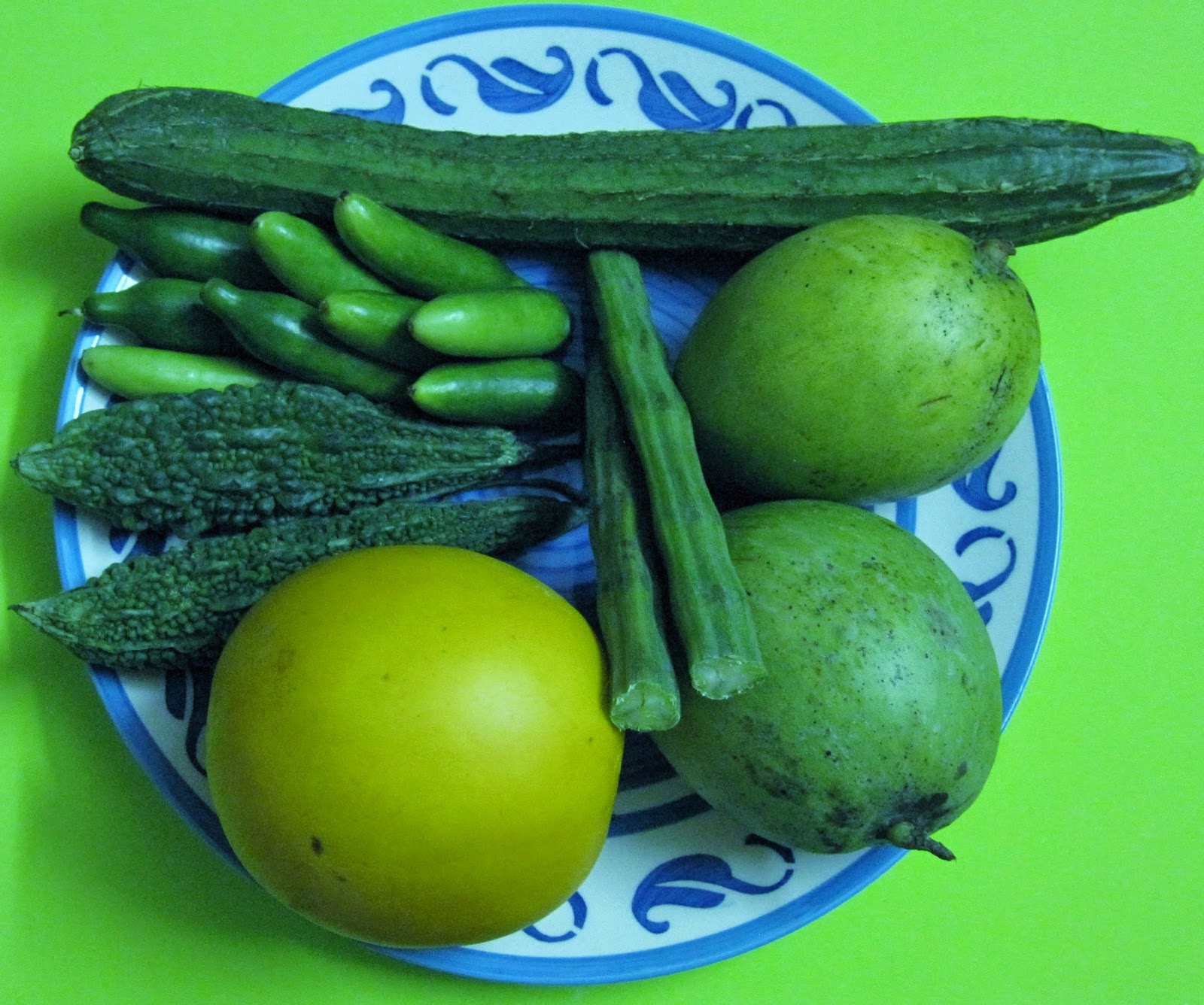
Vegetables used in kurala avakaya:


Vegetables cut into pieces:


Chili powder mixture added to the cut pieces:


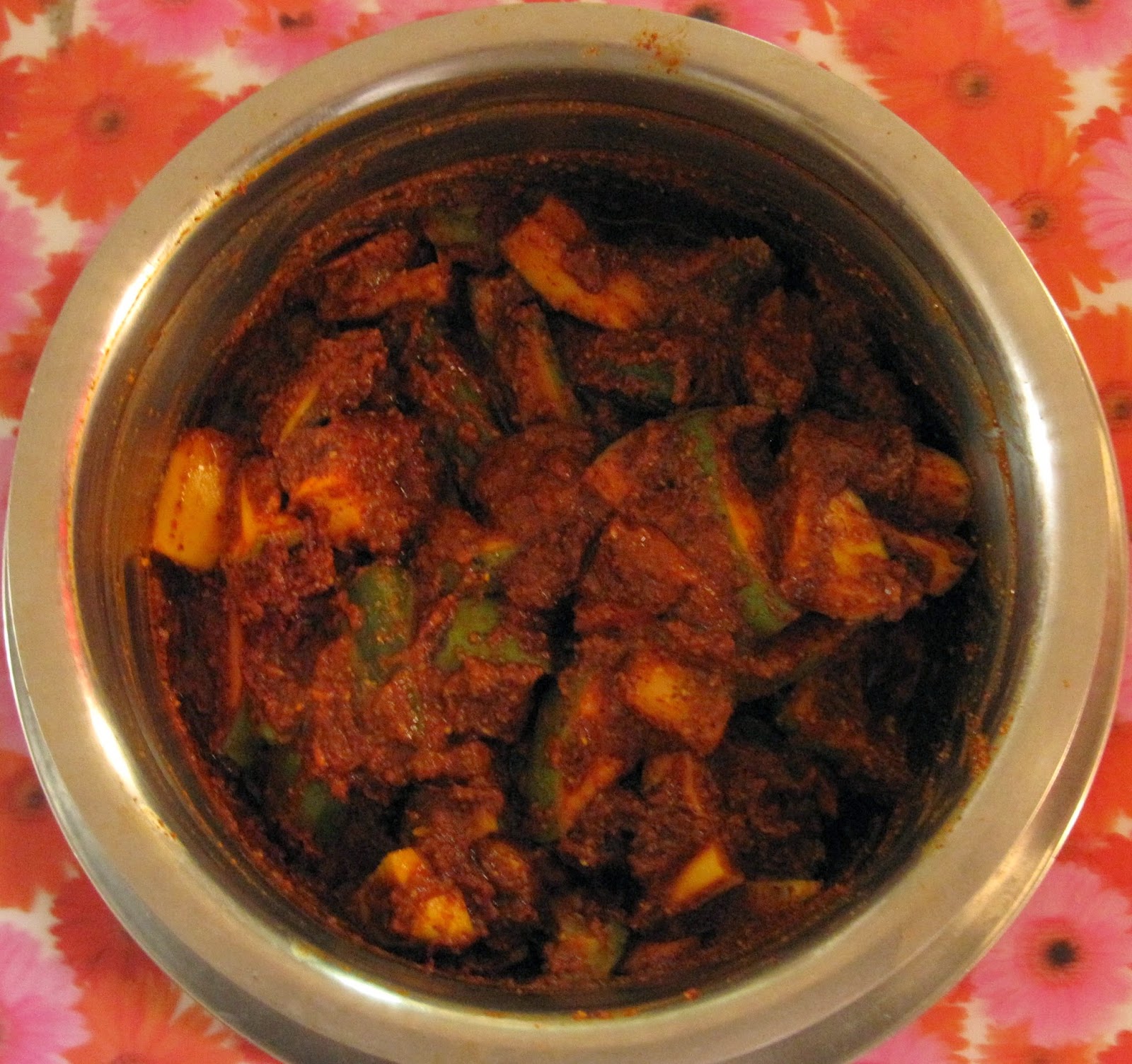
Cut pieces and powders mixed well:


Ingredients:

All the following vegetable pieces to make upto 2 cups (equal to measure of mango pieces)
  •      2 cups mango pieces and
  •      Dosa kaya
  •      Beera kaya (Ridge gourd)
  •      Kakara kaya (Bitter gourd)
  •      Mulakkada (Drum sticks)
  •      Rhubarb (available in USA)
  •      2 tsp turmeric powder
  •      1 and 1/2 cups chili powder
  •      1 and 1/2 cups salt
  •      2 cups mustard powder
  •      1 cup oil
Seasoning:
  •      5 or 6 red chilis
  •      2 tbsp. chana dal
  •      2 tbsp. urad dal
  •      2 tbsp. mustard seeds
  •      1tsp  Hing (Asafetida)
  •      A few curry leaves

Directions:

  1.      Wash and dry all the vegetables.
  2.      Cut the mango with the peel and avoid cutting the seed portion.
  3.      Cut the vegetables along with peel into 1/2 inch wide and 1 and 1/2 inch long pieces. Remove seeds from dosa kaya.
  4.      For 2 cups of mango pieces, about 2 cups of all the other vegetables are needed.
  5.      Mix chili powder, mustard powder, salt and turmeric powder together in a large plate.
  6.      Add the vegetable pieces and mix well.
  7.      Add a few table spoons of oil and leave the mixture in a jar.
  8.      On the second day, mix it well from the bottom.
  9.      Heat oil in a pan and add chilis, dals and mustard seeds.
  10.      When mustard seeds crackle, add hing and curry leaves.
  11.      Pour the seasoning over the pickle mixture.
  12.      After an hour or so, mix the pickle well from the bottom.
  13.      Transfer the pickle to a clean dry jar.


Sunday, 14 September 2014

Mango menthi baddalu ( mango pieces in methi mustard powder and jaggerry)


Early summer or spring time, when small mangos are available, some of these varieties are prepared for temporary use. In this variety, lot of jaggery and a little methi mustard powder (methi mustard roasted and powdered ) are used. Children also like this as it is sweet and sour.


Ingredients:

  •      1/2 cup mango pieces, peeled and cut into small cubes
  •      2 tsp methi mustard powder
  •      3 tbsp. jaggery (brown sugar) amount according to taste
  •      Salt to taste
  •      A pinch of turmeric
  •      2 tsp oil

Directions:

  1.      Add the powders to the mango pieces.
  2.      Add oil.
  3.      Let it stand for 3 to 4 hours.
Jaggery and salt when mixed with mango pieces, give out a lot of juice.


Wednesday, 7 May 2014

Mango ava baddalu (Mango pieces soaked in mustard paste)

When small young green mangos are in season, some temporary pickle (chutney) varieties are popular items in daily menu. mango preferred for this variety is tender and seed is not formed yet.   If you do not have access to baby mangos, you can make this with the available mangos.


Ingredients:

  •      1/2 cup mango pieces, cut into 1 to 1and 1/2 inch long pieces along with skin
  •      4 tbsp. mustard seeds or powder
  •      Salt to taste
  •      One pinch turmeric powder
  •      2 tsp chili powder
  •      2 tsp oil
  •      Pinch of hing

Directions:

  1.      Grind mustard seeds in a few spoons of water along with turmeric powder and chili powder.
  2.      If using mustard powder, just add a few spoons of water to the mixture of all powders.
  3.      Stir in the mango pieces in to the paste.
  4.     Add oil and mix well.
  5.     Let it sit for  4 to 5 hours before serving.

Note:

Can be kept in refrigerator for a month or more.
Small Tomatillos can be used in place of mango pieces. Do experiment with tomatillos.
.